GRAP in Delhi-NCR: What Each Stage Means for Your Factory This Winter
Stage II is in force and dust-raising construction is restricted from 5 to 20 November. What each GRAP stage asks of NCR factories, DG sets included.
EHS & HSSE7 min read
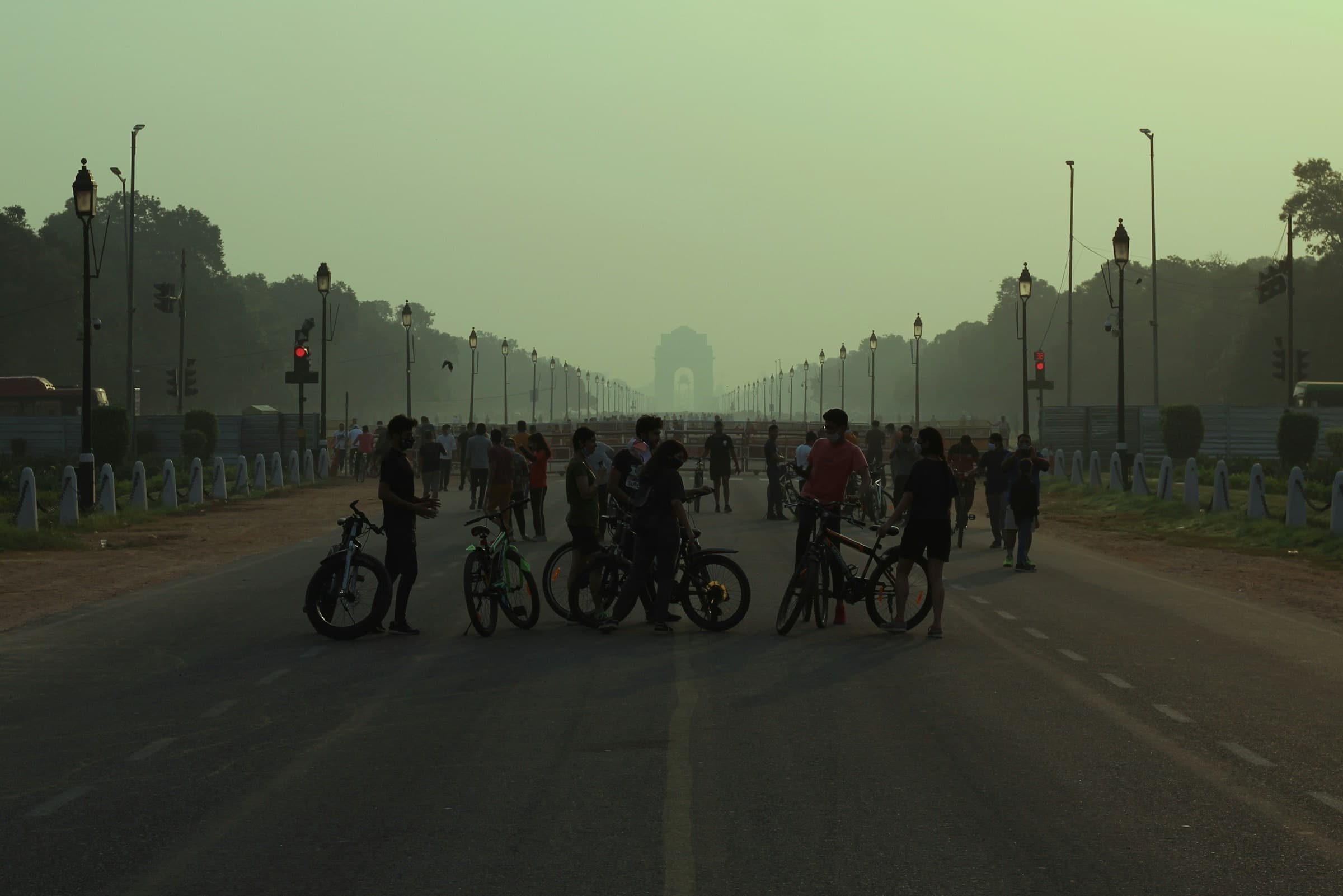
On 2 November 2026 Delhi’s air quality index read 324, up from 117 two days earlier, and the Commission for Air Quality Management (CAQM) put Stage II of the Graded Response Action Plan into force across the National Capital Region. A separate CAQM order restricts dust-generating construction across the NCR from 5 to 20 November. If you run a plant in Gurugram, Faridabad, Sonipat, Ghaziabad, Noida or anywhere else in the NCR, both apply to you, and the stages can tighten within days.
This post walks through what each stage means for a factory, using the CAQM’s own schedule and orders. It covers the rules as they stand in early November 2026; the stages change with the air, so check the latest order before acting.
How GRAP works
GRAP is a schedule of actions tied to Delhi’s AQI. The current version is the revision the CAQM issued on 29 September 2026.
| Stage | Air quality | Delhi AQI |
|---|---|---|
| Stage I | Poor | 201 to 300 |
| Stage II | Very Poor | 301 to 400 |
| Stage III | Severe | 401 to 450 |
| Stage IV | Severe+ | Above 450 |
Three rules in the schedule matter more than the table itself. The stages add up: when Stage II is in force, every Stage I action still applies, and so on up. A stage can be invoked before the AQI reaches its range if the forecast says a worse reading is coming and likely to last. And a sudden spike can bring a stage in at once, without a forecast.
In practice that means you can plan on Monday under Stage I and find yourself under Stage III by Thursday. Stage I came in on 21 October this year, and Stage II followed twelve days later.
Stage I: the rules that run all winter
Most of what a factory has to do sits in Stage I, and because the stages add up, it stays in force for as long as any stage does.
Inspections and fuels. The schedule tells regulators to step up inspections of industries, including units in non-conforming areas, and to take penal action against non-compliant ones. It also calls for strict enforcement of emission standards and the use of approved fuels only, in industries, brick kilns and hot mix plants. Enforcement is real: the CAQM reported in September that its Enforcement Task Force had issued closure orders to 1,831 units.
Diesel generator sets. The September revision moved the DG set rules from Stage II to Stage I, so they now apply from the first stage. DG sets must not be used as a regular source of power, and their use across industrial, commercial and residential sites follows the CAQM’s Direction No. 76 of 29 September 2023. In short:
- Sets running on LPG, natural gas, biogas, propane or butane, of any size, have no restrictions.
- Sets up to 800 kW built to the newer standards in MoEFCC notification GSR 804(E) of 3 November 2022 have no restrictions.
- Older diesel sets from 41 kW up to 800 kW need dual-fuel operation or a retrofitted emission control device fitted by a certified agency. Between 19 kW and 41 kW, dual-fuel operation is required.
- Portable sets below 19 kW are generally not permitted, except for the listed emergency services.
- An older set not running dual-fuel, even if the only reason is that gas isn’t available at your site, is allowed only for those emergency services.
The emergency services list covers things such as hospitals, lifts and escalators, railways, metro, airports, water pumping, sewage treatment, defence and telecom. A general manufacturing plant is not on it. If your backup power is an old diesel set without a retrofit, the practical answer this winter is no backup power from it.
Construction at your site. Dust control rules apply to any construction or demolition, and a plot of 500 square metres or more has to be registered on the state’s dust control web portal before work is allowed.
Stage II: little new for the shop floor
Stage II, in force since 2 November, adds road sweeping and water sprinkling, higher parking fees, action at identified pollution hotspots and closer inspection of dust control at construction sites. It also asks governments in Delhi, Gurugram, Faridabad, Ghaziabad and Gautam Buddha Nagar to stagger the hours of public offices. For a factory, the changes are more inspectors and less tolerance, not new obligations.
5 to 20 November: a special order on top
Looking at November AQI data from 2018 to 2025, the CAQM found that early to mid November is when the air reliably turns severe. So on 30 October it issued an order that runs from 5 to 20 November regardless of the stage:
- Dust-generating demolition and outdoor construction is restricted across the entire NCR. Railways, metro, airports, bus terminals, hospitals, water supply and sanitation, defence and projects of national importance are exempt. Highways, roads, flyovers, power lines, pipelines and telecom are covered by the restriction.
- State government and private offices in Delhi, Gurugram, Faridabad, Sonipat, Ghaziabad and Gautam Buddha Nagar work with up to 50% of staff attending, the rest from home. Industrial establishments and essential services are exempt where this isn’t feasible.
If you were planning a new shed, a boundary wall or a demolition at your plant during these two weeks, it waits. Your head office staff may be working from home, but the plant runs.
Stage III: the list to read before it arrives
Stage III starts at an AQI of 401, and in recent winters Delhi has reached it in November. For industry, it closes all stone crushers and all mining and associated activity in the NCR.
It also restricts a long list of dust-generating construction work, and several items on it happen inside factories during expansion or maintenance:
- excavation, boring, drilling and piling, and all demolition;
- brick and masonry work, and operating ready-mix concrete batching plants;
- major welding and gas cutting (minor welding for mechanical, electrical and plumbing work is allowed);
- painting, polishing and varnishing, and cement, plaster and other coatings (minor indoor repairs excepted);
- cutting, grinding and fixing tiles, stone and flooring;
- loading and unloading cement, fly ash, bricks, sand and crushed stone inside or outside a project site, and moving construction material on unpaved roads.
Read carefully, these are restrictions on construction and demolition activity. A plant whose daily process involves welding is in a different position from a contractor welding a new mezzanine. If you’re not sure which side of that line your work falls on, ask your state pollution control board before Stage III, not during it.
At Stage III, state governments also decide whether offices run at 50% attendance.
Stage IV
Stage IV adds a ban on linear public projects such as highways and pipelines, and allows states to consider further emergency steps, including closing non-emergency commercial activity and odd-even rules for vehicles. These are decided at the time, so watch the order rather than guessing.
What to do this week
- Check your DG sets. List each set with its capacity, fuel and whether it meets GSR 804(E), runs dual-fuel or has a certified retrofit. Anything that doesn’t is off the table this winter.
- Confirm your fuels. Make sure every boiler, furnace and heater runs on a fuel approved for the NCR, and keep the paperwork that shows it.
- Pause or reschedule site work. Move outdoor construction and demolition past 20 November, and check whether any planned maintenance would fall under the Stage III list.
- Get your consents ready to show. Inspections are being stepped up. Your consent to operate, emission monitoring records and DG set papers should be findable in minutes.
- Name someone to watch the orders. The CAQM publishes each stage order on its website. One person should read it the day it comes out and tell the plant what changes.
Where Rampart fits
The rules move quickly in winter, but the work underneath is ordinary record-keeping: consents with renewal dates, inspection checklists, a list of equipment and its compliance status, and a note of who was told what. Rampart keeps a register of licences and legal obligations with reminders before they lapse, runs inspection checklists from a phone, and records incidents and the actions that follow, for one site or several.
See EHS & HSSE for what’s included, or book a demo below.
Sources
- CAQM: Graded Response Action Plan for NCR, revision of 29 September 2026: general provisions; Stage I actions 12, 13, 17 and 18; Stage II; Stage III actions 1 to 3 and 9; Stage IV
- CAQM order of 2 November 2026: Stage II invoked in Delhi-NCR
- CAQM order of 30 October 2026: precautionary measures for 5 to 20 November 2026
- CAQM: list of GRAP orders, including the Stage I order of 21 October 2026
- PIB, 29 September 2026: CAQM approves revised GRAP schedule, including the Enforcement Task Force figures
This article summarises the CAQM schedule and orders as of 5 November 2026. It is general information, not legal advice: check the latest order and your state pollution control board for your own sites.